
The holiday season creates valuable opportunities for quick-service restaurant (QSR) brands, but customer demand is rarely consistent. Shopping trips, holiday travel, family gatherings, and changes in work schedules all influence when and where consumers decide to eat. A restaurant that typically sees its busiest traffic during weekday lunch may experience higher demand on weekends or during afternoon shopping hours.
For QSR brands, these changes make traditional media planning less reliable. Campaigns built around fixed schedules and broad seasonal promotions can miss valuable opportunities or spend heavily during periods when restaurants are already busy.
A stronger QSR holiday marketing strategy aligns advertising with actual customer behavior. By understanding when demand is likely to increase, where customers are spending their time, and which promotions are most likely to influence their decisions, brands can make better use of their media budgets.
In this white paper, MatrixPoint explores how QSR brands can use historical traffic data, demand forecasting, targeted media scheduling, and independent measurement to drive incremental visits, increase sales, and improve holiday marketing ROI.
How Holiday Consumer Behavior Changes QSR Traffic Patterns
Holiday traffic patterns can look very different from normal business operations. Consumers take time off work, travel more frequently, shop outside their usual routines, and gather with family and friends. These changes affect everything from meal timing to restaurant location preferences.
For example, a QSR location that relies on office workers for weekday lunch may experience slower traffic during the final weeks of December. On the other hand, restaurants conveniently located near shopping centers or major travel routes may see a rise in demand as consumers spend more time away from home.
Understanding these changes helps identify when advertising can influence purchase decisions and when traditional campaign schedules may no longer apply.
Shifting Dayparts and Dining Occasions
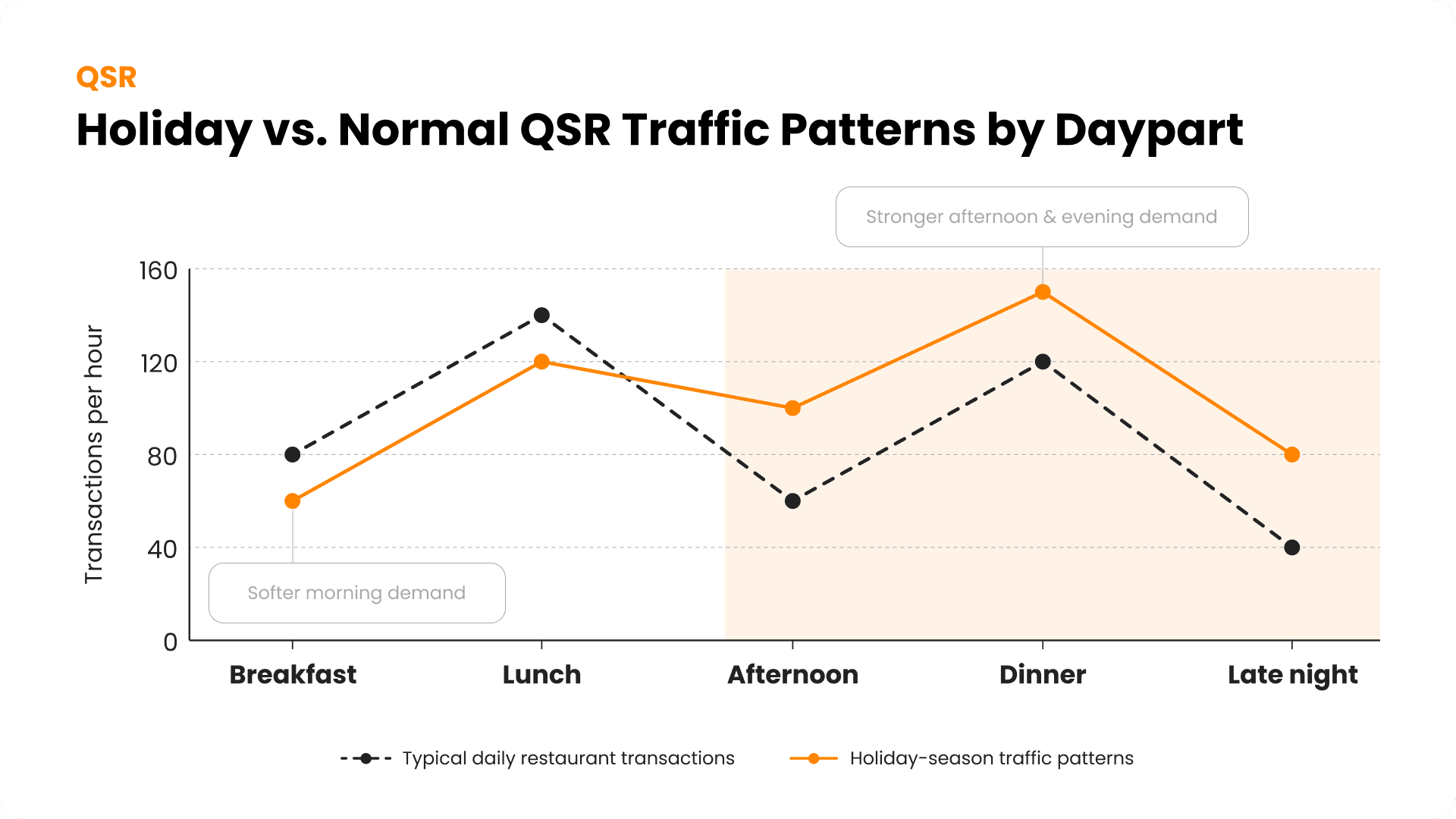
QSR traffic typically follows familiar meal periods, including breakfast, lunch, dinner, and late-night dining. During the holidays, those patterns can change.
Holiday shoppers may stop for meals between errands, families may buy larger orders after evening events, and travelers may seek convenient breakfast or late-night options. These occasions create demand outside a restaurant's normal peak hours.
Rather than relying on standard daypart schedules, QSR brands should examine historical transaction data to identify how customer behavior changes during specific holiday periods. This allows marketers to adjust promotional timing around actual dining occasions.
Regional and Location-Based Differences
Holiday demand also varies by market and restaurant location. Urban restaurants may experience reduced weekday traffic as office workers take vacation, while suburban locations near retail centers may see higher weekend sales.
Restaurants near airports, highways, entertainment venues, and shopping districts can experience different demand patterns, even within the same market.
This makes store-level planning especially important. A national campaign may provide consistent brand messaging, but media timing and promotional support should reflect the local conditions that influence customer traffic.
Using Historical Data to Predict Peak Holiday Traffic Windows
Historical sales and transaction data provide a useful starting point for identifying holiday traffic opportunities. By examining previous holiday seasons, QSR brands can identify patterns in customer visits, order volume, and spending that may help predict future demand.
However, last year's busiest days may not produce the same results this year. Holiday dates shift, local events change, and weather or economic conditions can influence customer behavior.
An effective forecasting approach compares holiday performance with normal trading periods while accounting for these differences. It should also consider store hours, prior promotions, and changes in the number or location of restaurants.
Identifying High-Value Traffic Windows
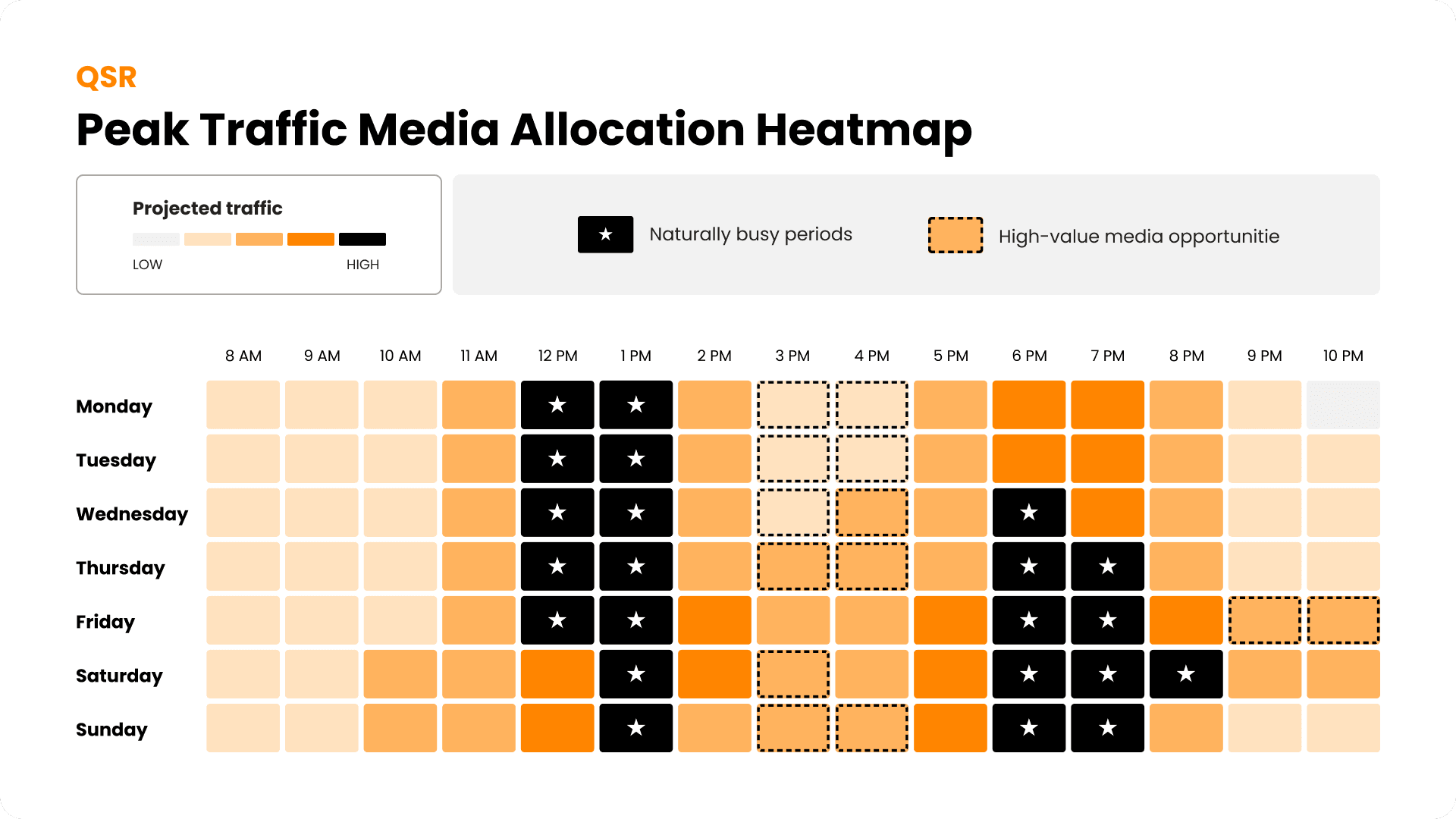
The busiest hours aren’t always the best opportunities for additional advertising. A restaurant operating near full capacity during lunch may have limited ability to serve more customers. Increasing media investment during that period could raise advertising costs without producing additional revenue. Alternatively, a slower afternoon period may offer an opportunity to attract customers who would otherwise choose another restaurant or delay their purchase.
QSR brands should evaluate traffic windows based on expected demand, available capacity, average order value, and the potential to generate additional sales. This helps distinguish periods with high traffic from those with the greatest opportunity for profitable growth.
Using Predictive Analytics to Improve Forecasting
Predictive analytics can help QSR brands anticipate changes in demand by combining historical sales with other relevant information. Weather forecasts, local events, travel activity, school schedules, and promotional calendars can provide additional context for estimating when traffic may increase or decline.
For example, a forecast showing increased weekend activity near a shopping district may support additional media investment for nearby restaurants. A severe weather forecast may lead marketers to reduce in-store traffic campaigns or promote delivery options instead.
These forecasts are estimates, not guarantees. Their value comes from helping teams plan ahead, test assumptions, and adjust media investment as new information becomes available.
Aligning QSR Media Spend with Peak Traffic Windows
One of the most important opportunities in holiday QSR advertising is improving when media dollars are spent. Many restaurant campaigns rely on fixed daily budgets or schedules that are relatively consistent throughout the season. While this approach simplifies management, it may overlook changes in customer demand and purchasing behavior.
A more targeted approach directs advertising toward periods when consumers are likely to make dining decisions and when restaurants can benefit from additional traffic.
Daypart Targeting and Media Scheduling
Different media channels can influence consumers at different points before a purchase. Paid search can reach customers actively looking for nearby restaurants, meal deals, or convenient dining options. Social media and mobile advertising can introduce promotions earlier, while programmatic media can support reach during selected periods based on location and audience behavior.
Timing matters. Advertising a lunch promotion when customers are already eating may be less useful than reaching them before they decide where to go. QSR brands should evaluate how far in advance each channel influences decisions and schedule campaigns accordingly. Media intended to build awareness may need a longer lead time, while search and certain mobile campaigns can help reach customers closer to the point of purchase.
Adjusting Media Budgets Across Locations
Holiday advertising budgets should also reflect differences in demand between restaurant locations. A location near a shopping center may benefit from increased weekend advertising, while a restaurant serving a business district may require less support during holiday office closures.
Brands can use store-level sales forecasts, local demand signals, and promotional performance to determine where additional media investment is most likely to produce results. This approach also allows teams to respond when demand changes. If a market experiences an unexpected traffic increase, budgets can be adjusted to support the opportunity, provided restaurants have the capacity to serve additional customers.
The objective is to allocate spending based on business potential rather than distributing equal amounts across every location.
Balancing Peak Demand with Slower Periods
Although peak traffic windows attract attention, they don’t always generate the strongest return from advertising. During naturally busy periods, customers may already be planning to visit a restaurant. Extra advertising could influence which brand they choose, but it may also reach people who would have purchased without an ad.
Slower periods can offer a different opportunity. Targeted promotions may encourage customers to visit earlier, make an additional purchase, or choose a restaurant they wouldn’t normally consider. For example, a midafternoon value offer near a retail center could attract holiday shoppers between lunch and dinner. A family meal promotion may help increase evening orders when households are returning from holiday activities.
The goal is to find the right balance between capturing existing demand and creating additional demand during periods with room for growth.
Building Holiday Promotions Around Customer Demand
Effective holiday QSR promotions should reflect why customers are purchasing, when they need a meal, and what they value most. Discounts can encourage purchases, but they aren’t always necessary. Convenience, speed, menu variety, family-sized options, and loyalty rewards can be just as relevant depending on the dining occasion.
Promotional planning should start with customer needs rather than choosing an offer and distributing it across every location and channel.
Matching Promotions to Holiday Dining Occasions
Different holiday activities create different purchase opportunities. Holiday shoppers may respond to quick meal options that fit between errands. Travelers may prioritize convenience and predictable service, while families may prefer bundled meals that make dinnertime easy.
A QSR brand can align promotions with these occasions by adjusting creative messaging, featured menu items, and advertising schedules. For example, restaurants near shopping areas might promote afternoon snacks or convenient meal options during busy retail weekends, while locations serving residential neighborhoods may focus on family bundles during evenings when households are preparing for holiday gatherings. These campaigns become more relevant when the offer matches the customer's immediate needs.
Protecting Margins During Promotional Periods
Higher transaction volume does not automatically mean greater profitability. Discounts reduce revenue per transaction and can create additional costs when increased demand requires more labor or strains restaurant operations. Promotions can also reduce profits when existing customers use an offer for purchases they would have made at full price.
QSR brands should evaluate promotional performance using sales, transaction volume, average order value, food costs, and contribution margin. When possible, brands should also test whether an offer generates incremental purchases rather than shifting existing demand into discounted transactions.
The strongest holiday promotions create additional profitable sales while maintaining a positive customer experience.
Coordinating Paid Media, Mobile Apps, and Loyalty Campaigns
Holiday advertising works best when paid and owned marketing channels support the same business goals. Paid search, social media, and mobile advertising can help QSR brands reach consumers who are considering where to eat. Mobile apps, email, SMS, and loyalty programs can encourage repeat purchases and communicate relevant offers to existing customers. For example, paid media may introduce a holiday meal promotion to new customers, while loyalty members receive a related offer based on their past purchase behavior.
Timing and coordination are important. Customers should receive messages that are consistent across channels without seeing the same promotion so frequently that it becomes disruptive. Brands should also consider the differences between reaching an audience and generating actual purchases. An app notification or promotional email may have strong engagement, but its value depends on whether it actually drives more transactions.
Using shared promotional calendars, audience information, and consistent performance reporting can help marketing teams coordinate these efforts and reduce unnecessary overlap.
Measuring the Real Impact of Holiday QSR Campaigns
Holiday campaigns can generate strong engagement without producing the same level of business growth. Advertising platforms report impressions, clicks, conversions, and other useful metrics, but these measurements don’t always show whether a campaign caused someone to visit a restaurant or make an additional purchase.
Seasonal demand creates another challenge. Sales may increase naturally during holiday shopping and travel periods, making it difficult to separate the effects of advertising from normal changes in customer behavior. QSR brands need measurement approaches that connect media investment with actual restaurant performance.
Connecting Media Performance to Store-Level Results
Store-level transaction and sales data can help brands evaluate whether advertising activity is associated with changes in customer demand. Useful measures include transaction counts, total sales, average order value, promotional redemptions, and contribution margin.
These results should be examined by restaurant location, daypart, and promotional period. A campaign may perform well in one market but produce minimal results in another because customer demand, competitive conditions, or restaurant capacity differ.
Comparing results with relevant historical periods can provide context, but those comparisons should account for seasonality and other factors that affect traffic. This analysis helps identify which campaigns deserve additional investment and which may need changes.
Measuring Incremental Sales and Return on Investment
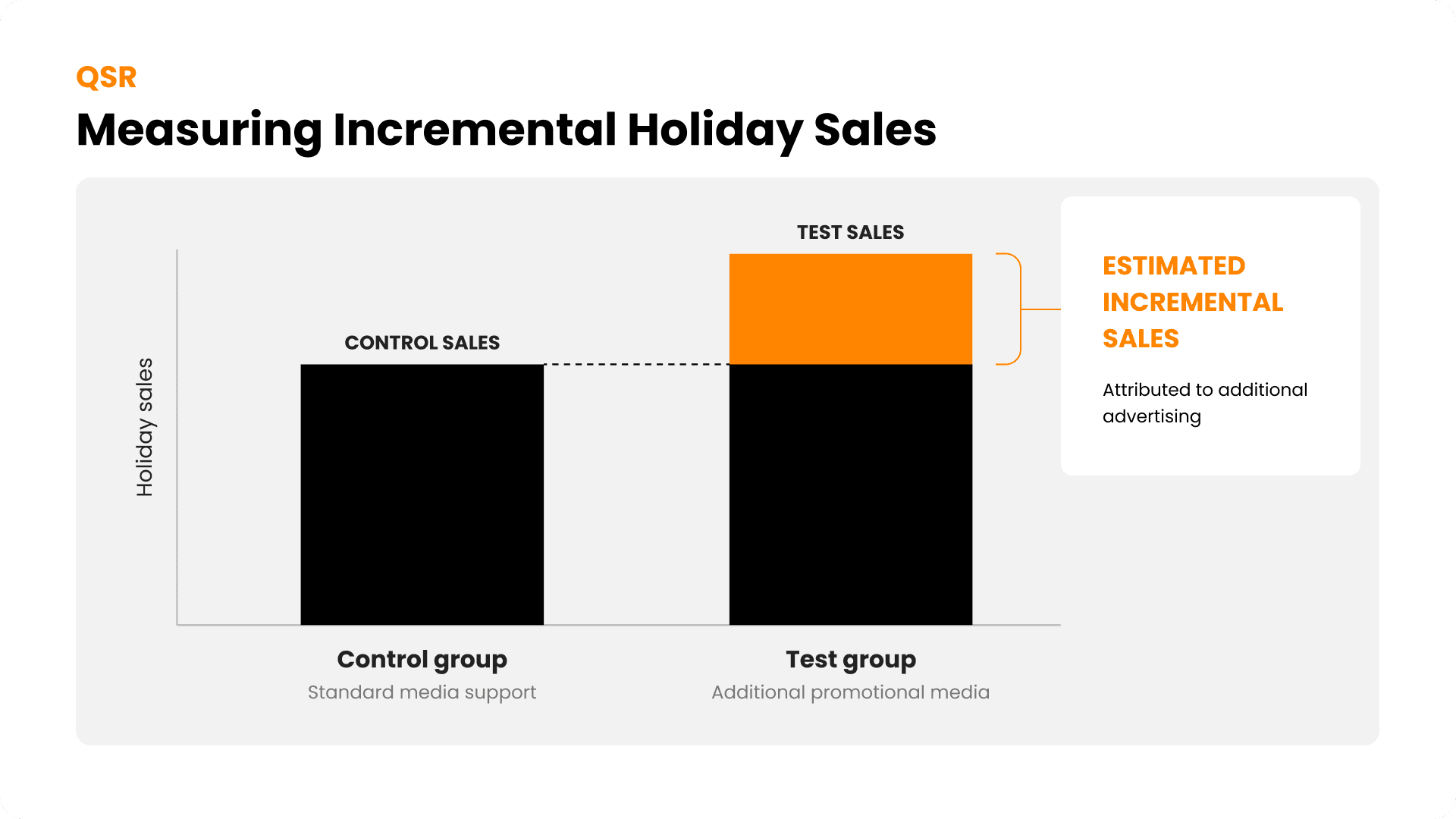
Incrementality testing helps estimate whether advertising generated sales that would not have occurred without the campaign.
One approach compares similar groups of restaurants or markets where one group receives additional media support and another serves as a control. Differences in sales can then be evaluated while accounting for factors such as historical performance, local conditions, and promotional activity. This helps determine whether increased advertising produced business growth or primarily reached customers who were already likely to purchase.
QSR brands should evaluate incremental sales alongside campaign costs and profit margins to understand the financial return of their media investments. These findings can improve future holiday plans by identifying which promotions, channels, locations, and time periods produce the strongest results.
A Practical Framework for Holiday QSR Media Planning
A successful QSR holiday media strategy requires more than identifying busy periods. Brands need a structured approach that connects customer demand with promotional planning, campaign execution, and measurement.
The following five steps provide a practical framework:
Step 1: Analyze Historical Holiday Traffic
Review previous holiday sales and transaction patterns by location, day, and hour. Compare these results with normal operating periods to identify significant variations in customer behavior. Account for changes in restaurant hours, past promotions, and external conditions that may have influenced demand.
Step 2: Forecast High-Value Traffic Windows
Use historical data and available market signals to estimate where and when holiday demand may increase. Consider local shopping activity, travel periods, weather forecasts, and restaurant capacity. Prioritize periods where additional advertising has a reasonable opportunity to generate profitable sales.
Step 3: Align Media and Promotional Schedules
Build advertising schedules around customer dining occasions and expected demand. Choose media channels based on how they influence purchase decisions, and match promotional offers to the needs of each target audience. Allow flexibility for different markets and restaurant locations.
Step 4: Monitor and Adjust Campaigns
Review campaign performance alongside sales and transaction data throughout the holiday season. Identify shifts in demand, underperforming promotions, and opportunities to move media investment between locations or time periods. Establish clear budget limits and decision rules so adjustments support business goals.
Step 5: Measure Incremental Results
Evaluate whether campaigns produced additional visits, transactions, and profitable sales. Use appropriate testing methods to separate advertising impact from normal holiday demand. Apply the findings to improve future promotional calendars, budget allocation, and media planning.
How MatrixPoint Helps QSR Brands Improve Holiday Media Performance
Holiday demand creates opportunities for QSR brands, but capturing that demand requires a clear understanding of customer behavior and the business impact of media investment.
MatrixPoint helps QSR brands connect historical traffic patterns, demand forecasting, media planning, and independent measurement to make better advertising decisions. Our approach helps brands identify high-value traffic windows, align promotional schedules with local demand, allocate budgets across locations and channels, and evaluate whether campaigns are driving incremental visits and sales.
By combining media expertise with advanced analytics and practical business insight, MatrixPoint helps QSR brands move beyond fixed advertising schedules and invest where marketing can make the greatest difference.
Ready to make your holiday media budget work harder? Contact MatrixPoint to develop a more targeted QSR marketing strategy that connects promotional spending with real customer demand, profitable sales, and measurable growth.